
The Responsible AI Lab (RAIL), in partnership with the Data Protection Commission (DPC) of Ghana, organised a virtual webinar on AI and Data Protection. The session explored how data protection principles apply in an increasingly AI-driven world and highlighted the responsibilities of individuals, organisations, and builders of digital systems.

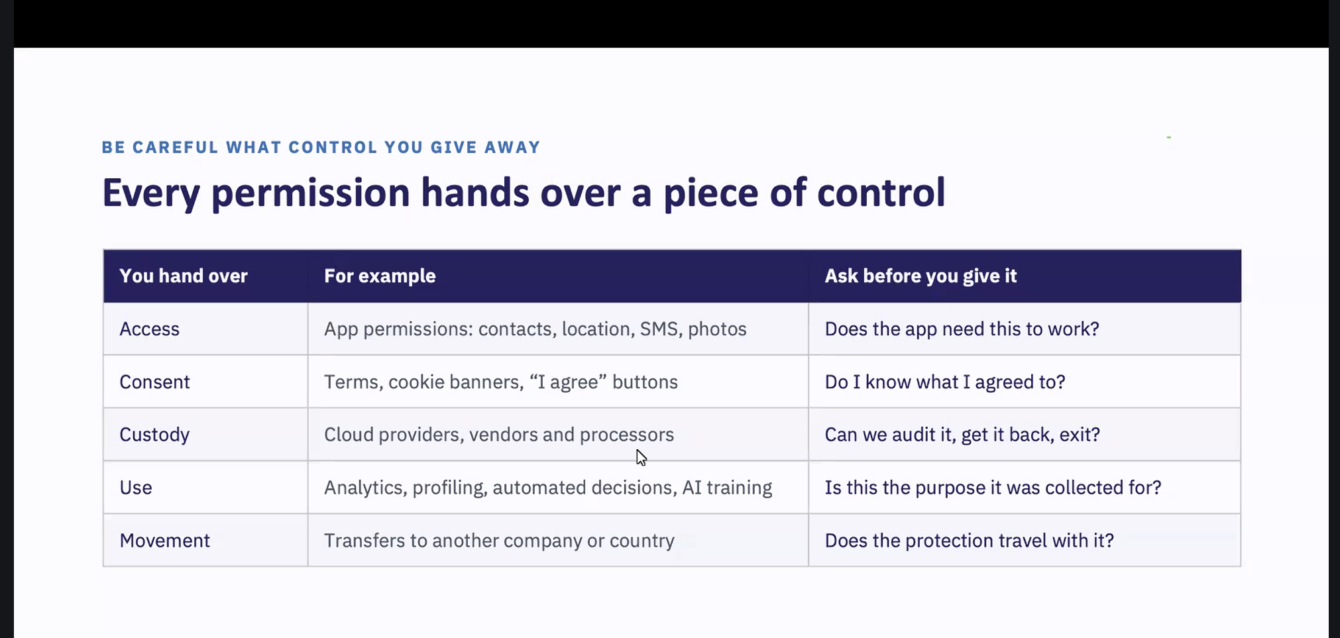
Speaking at the webinar, Dr. Arnold Kavaarpuo, Executive Director of the Data Protection Commission of Ghana, emphasised that every permission handed over by a user represents a transfer of control. He noted that users often give up access to contact information, location, photos, consent, custody, use, and movement.
On cross-border data transfers, Dr. Kavaarpuo said the real test is whether regulators can supervise how data is processed and obtain timely access when needed, recover the data or move it to another provider, and avoid dependence that leaves the country exposed.
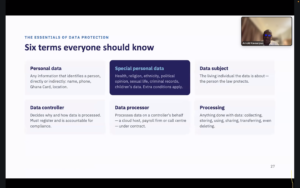
Dr. Kavaarpuo outlined several foundational concepts in data protection:
- Personal data is any information that identifies a person, directly or indirectly, such as a name, phone number, Ghana Card number, or location.
- The data subject is the living individual to whom the data relates—the person the law protects.
- Data processing refers to anything done with data, including collecting, storing, using, sharing, transferring, and even deleting it.
According to Dr. Kavaarpuo, individuals must be informed about what data is collected, why it is collected, and by whom. They should also be able to access a copy of their data. In addition, individuals have the right to complain and to claim compensation for damage or distress. The webinar also covered best practices for builders, organisations, and individuals.
The session stressed that Africa has the laws needed to protect data. The next step is to act together and build trust.
Responding to a participant’s question about what Ghana needs to put in place to pursue large data centres, Dr. Kavaarpuo pointed to the concept of a Data Embassy where data centres are established with protections similar to embassies, enjoying protection and freedom from interference. He noted that hosting centres in African countries presents opportunities, and that building infrastructure can help attract data centres. A supporting environment, including reliable energy, is also essential.
The webinar reinforced that effective data protection requires informed individuals, responsible organisations, robust regulatory oversight, and coordinated action across the continent.