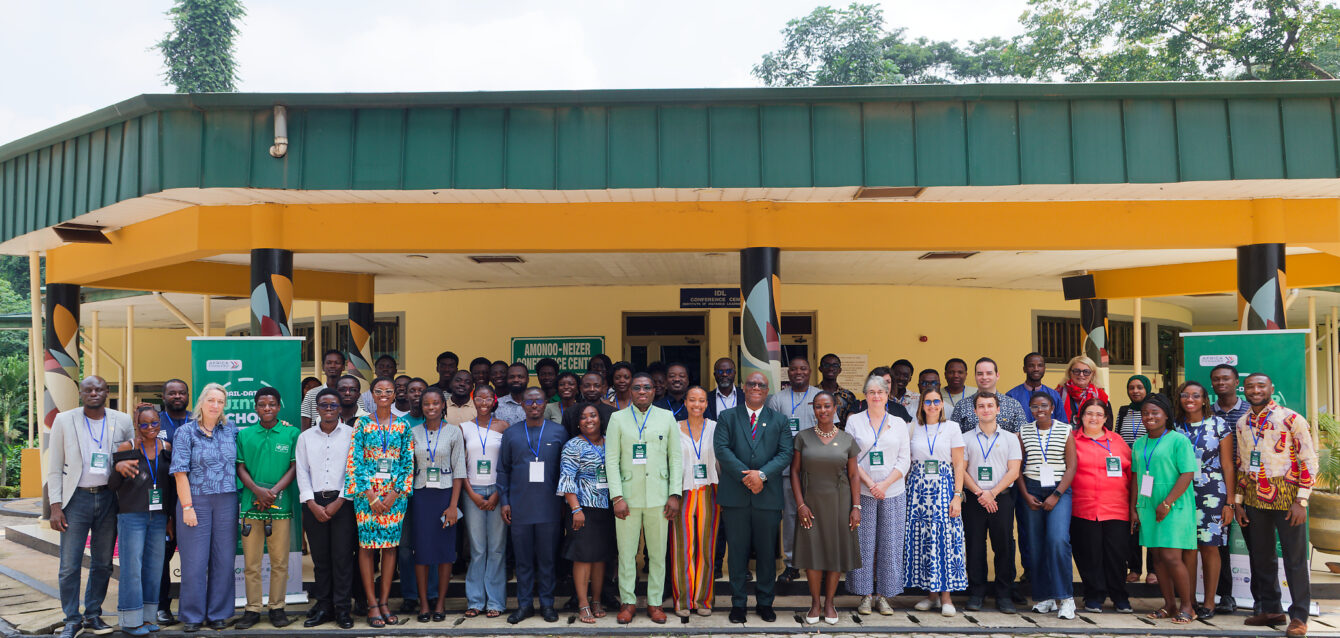
The Fonds Expertise France for Artificial Intelligence for Sustainable Development (FEF-AI4SD) Project has officially concluded, marking two years of groundbreaking work in developing AI applications across healthcare, agriculture, energy, and disability support while strengthening local research capacity through strategic partnerships.
The project represented a collaborative effort among KNUST’s Responsible AI Laboratory (RAIL), the Ghana Atomic Energy Commission (GAEC), Université Paris-Saclay, and the French Embassy in Ghana.
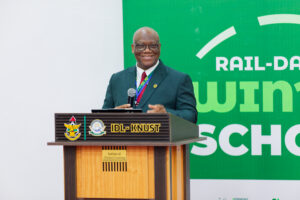
Prof. Jerry John Kponyo, Project Lead for the AI4SD project at KNUST and Principal Investigator and Scientific Director of RAIL, emphasized that the project was designed to translate AI research into practical solutions addressing real-world needs. “The project sought to take artificial intelligence out of the laboratory and into real life,” he stated.
The initiative produced notable applications across multiple sectors, including health, agriculture, energy, education, environmental management, and assistive technology. Key innovations included SignTalk, iWheel, iSee, and iHear, assistive technologies that support persons with disabilities. Also, AI applications for crop disease detection, electricity demand forecasting, and water filtration
He said the project also supported robotics and coding activities for Junior and Senior High Schools through the RAIL Robotics Club and tertiary students through the SHECodes initiative, while strengthening the skills of teachers and researchers.
Prof. Kponyo thanked the French Embassy in Ghana and all AI4SD partners, noting that “this is not the end but a foundation for what comes next.”
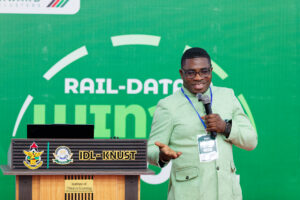
Dr. Daniel Adjei, FEF-AI4SD Project Lead at the Institut de Chimie Physique/CNRS, Université Paris-Saclay, highlighted how the initiative strengthened research capacity and scientific cooperation between Ghanaian and French institutions. “We have maintained and built human resources, invested in people, and contributed to the new generation. International cooperation must be built on mutual trust,” he said.
Training programmes, scientific exchanges, and research partnerships helped students and young researchers develop practical skills in AI, computational modelling, and data-driven research while gaining international experience. Dr. Adjei called for a shift from short-term, project-based engagements towards sustained institutional partnerships founded on mutual trust, shared responsibilities, and recognition of each partner’s contribution.
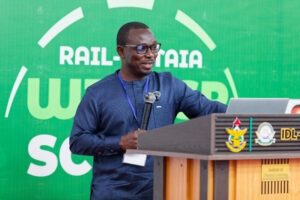
Prof. Francis Hasford, Deputy Director General and FEF-AI4SD Project Lead at GAEC, stressed that effective AI use in developing countries depends on solutions informed by local needs and expertise. “This opportunity can only be realised when AI tools are grounded in local data, local expertise, and local priorities,” he noted.
GAEC’s contributions under the project included crop health monitoring, agricultural yield prediction, and AI-assisted biomedical and epidemiological research.
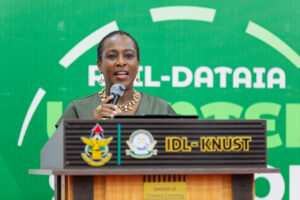
Darline Cothière, Head of Cooperation at the French Embassy in Ghana, emphasized the project’s role in connecting research, education, and innovation while placing local communities’ needs at the centre of technological development.
“Our ambition has been to encourage a generation that does not simply consume technologies developed elsewhere, but has the knowledge and confidence to create its own,” she said.
Ms. Cothière highlighted the project’s educational contributions through robotics clubs, the AI4SD Robotics Challenge, and SheCodes, which encouraged girls and young women to explore coding and AI. She cautioned that AI benefits must be accessible to all, warning that the technology could reinforce existing inequalities without deliberate efforts to include everyone.
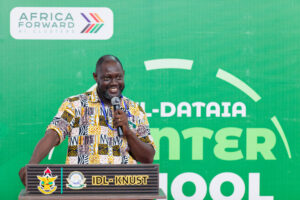
Prof. Kwadwo Mensah-Darkwa, Innovation and Entrepreneurship Theme Lead, explained how the team sought to harness innovation to create opportunity and entrepreneurship to turn opportunity into sustainable solutions. His presentation highlighted the importance of fostering innovation ecosystems that translate research into practical solutions for Africa’s development challenges.
He mentioned that his team trained start-up teams in marketing and design thinking skills and organized AI4SD SME training for small- and medium-scale businesses to leverage AI in their operations and accelerate growth.
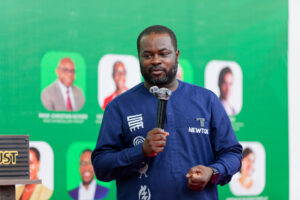
Isaac Newton Acquah from Innovation Spark shared how communications and visibility were managed throughout the project, including a documentary covering the project’s impact. The communication team utilized multiple media channels such as field visits, radio and TV appearances, podcasts, interviews, and publications to build visibility, strengthen public understanding, and position the AI4SD project.
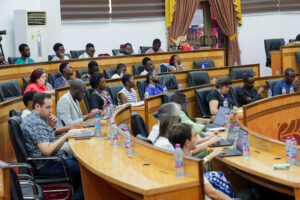
The FEF-AI4SD project leaves behind a legacy of strengthened partnerships, enhanced research capacity, and practical AI solutions that address real needs in Ghana and beyond. As Prof. Kponyo noted, the closing of this project marks not an end, but a foundation for future collaboration and impact.