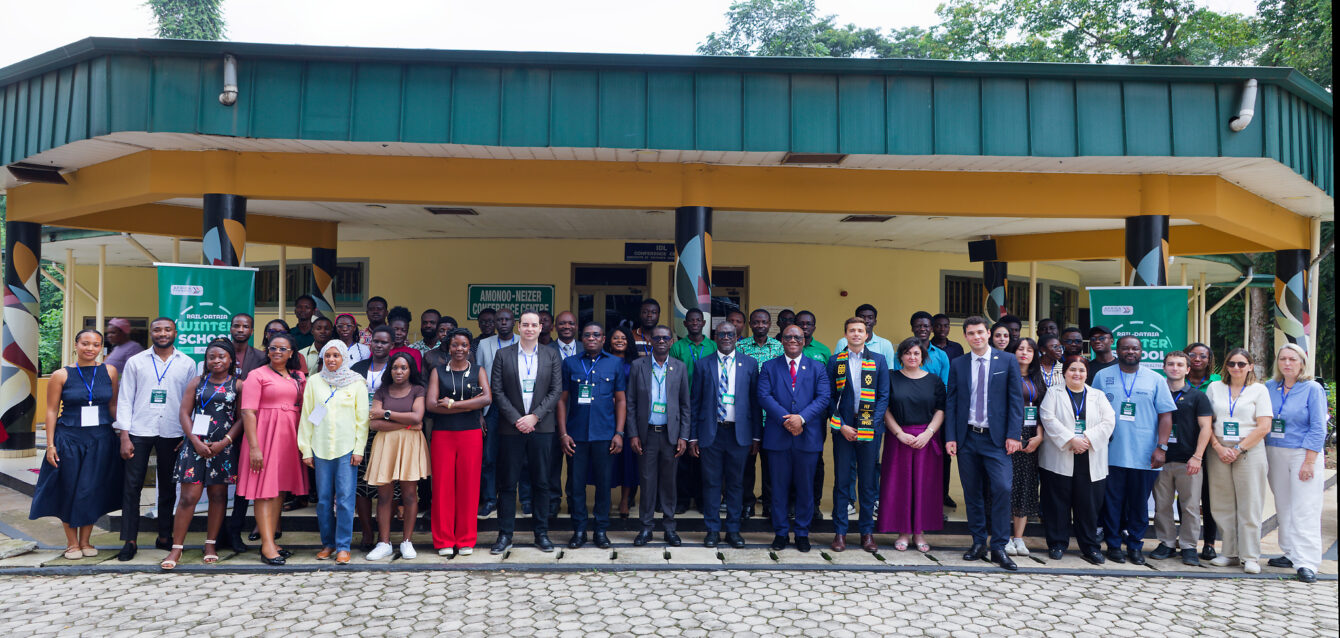
Researchers, academics and students from Africa and France gathered for the RAIL-DATAIA Winter School to examine how artificial intelligence can help address healthcare challenges and how to develop it responsibly for the populations it serves.
Organised through the Responsible AI Lab (RAIL), the Winter School forms part of the Africa Forward AI Clusters initiative, a collaboration between African universities and French institutions to strengthen AI research, training and entrepreneurship across Africa.
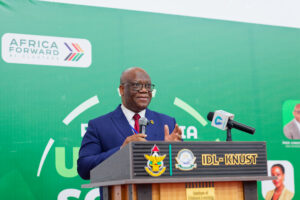
Prof. Jerry John Kponyo, Project Lead for the AI4SD project at KNUST and Principal Investigator and Scientific Director of RAIL, said AI could extend the reach of health professionals and improve access to services, particularly in underserved communities.
“AI cannot replace our doctors and nurses, but it can extend their reach,” he said, citing its potential to support medical imaging, identify high-risk pregnancies, anticipate disease outbreaks, and improve the management of medicine supplies.
He cautioned that AI applications in healthcare must be developed responsibly and reflect the populations they are intended to serve.
“A health AI trained on data that does not reflect our people will fail our people,” he said, stressing the need for fairness, transparency, accountability and the protection of patients’ privacy and dignity.
Health technologies must also keep clinicians and patients at the centre of decision-making and be accessible to communities beyond major teaching hospitals, he added.
Prof. Kponyo said the Africa Forward AI Clusters initiative aimed to strengthen Africa’s capacity to develop AI and turn research into commercial applications.
“The purpose of the clusters is to develop sovereign AI designed and trained in Africa and to bridge the gap between African scientific talent and commercial success,” he said.
The initiative involves Cameroon, Kenya, Benin, Ghana, Morocco, Egypt and South Africa, and provides opportunities for talent development, academic exchanges, research commercialisation and joint innovation challenges.
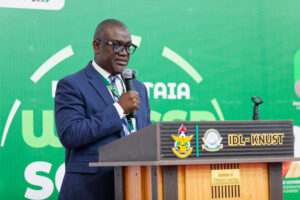
Prof. Kwabena Biritwum Nyarko, Acting Pro Vice-Chancellor and Provost of the KNUST College of Engineering, welcomed participants on behalf of the Vice-Chancellor and the university community. He said the Winter School demonstrated the importance of international research partnerships in addressing local and global challenges.
He said KNUST’s commitment to AI research was also reflected in its contribution, through RAIL, to the development of Ghana’s National AI Strategy.
Prof. Nyarko said African countries needed to move beyond adopting technologies developed elsewhere and build the capacity to develop and govern their own solutions.
“AI sovereignty does not mean technological isolation. It means building the capacity to develop our own solutions, protect our interests, and engage the global AI ecosystem from a position of knowledge and strength,” he said.
He urged researchers to consider the conditions needed for AI applications to improve healthcare, including affordability, accessibility, the availability of local data, and the capacity to expand their use.
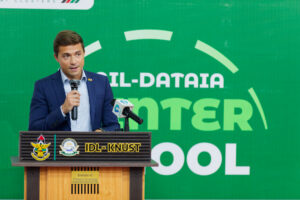
Mr Lucas Tourny, Executive Director of DATAIA at Université Paris-Saclay, said mutual understanding, persistence and shared values had helped build the partnership between KNUST and the French institution. He said responsible AI should enable innovation.
Mr Tourny stressed that AI development and use must preserve human judgement, emotions and relationships, with technological progress guided by shared values.
“When values, science and the human factor are aligned, the results will come,” he said.
He expressed confidence that the partnership could become a leading model for AI collaboration in Africa, producing lasting research outcomes and sustained academic engagement.
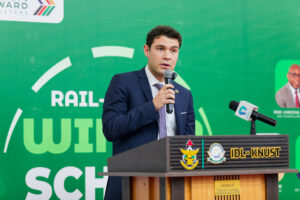
Representing the French Ministry for Europe and Foreign Affairs, Mr Thomas Dumont reaffirmed the French government’s commitment to scientific collaboration with African institutions. He described the Winter School as a practical outcome of the growing partnership between African and French research communities.
“This Winter School is a symbol of successful cooperation, a symbol of the renewed partnership with Africa envisioned by President Macron, and a symbol of what can be achieved when talented individuals work together,” he said.
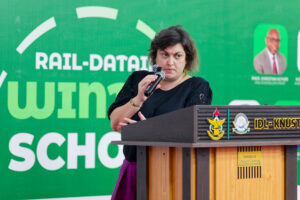
Ms Nathalie Nilsson-Thiello, representing the French Ministry of Higher Education, Research and Space, called for balanced partnerships that respond to the priorities of all participating institutions.
“Our partnerships must be balanced and close-knit. They must address both our own priorities and those of our partners,” she said.
She advocated joint research programmes, reciprocal academic mobility and stronger links between education, research and innovation. Involving young people and participants from the public and private sectors would help sustain the collaboration, she added.
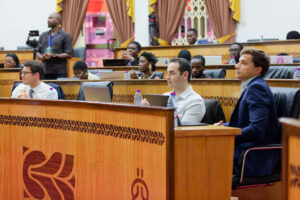
The Winter School’s programme covers AI applications in rare disease diagnosis, therapeutic HPV vaccine discovery, climate-resilient public health and the detection of ischaemic stroke.