
In a significant step towards shaping the future of engineering education, the Responsible AI Lab (RAIL) played a pivotal role at the KNUST College of Engineering’s intensive Summer School. The event, themed “Leveraging AI for Quality Engineering Education,” served as a crucial platform for RAIL to outline its vision for a responsible, ethical, and integrated approach to artificial intelligence in academia.
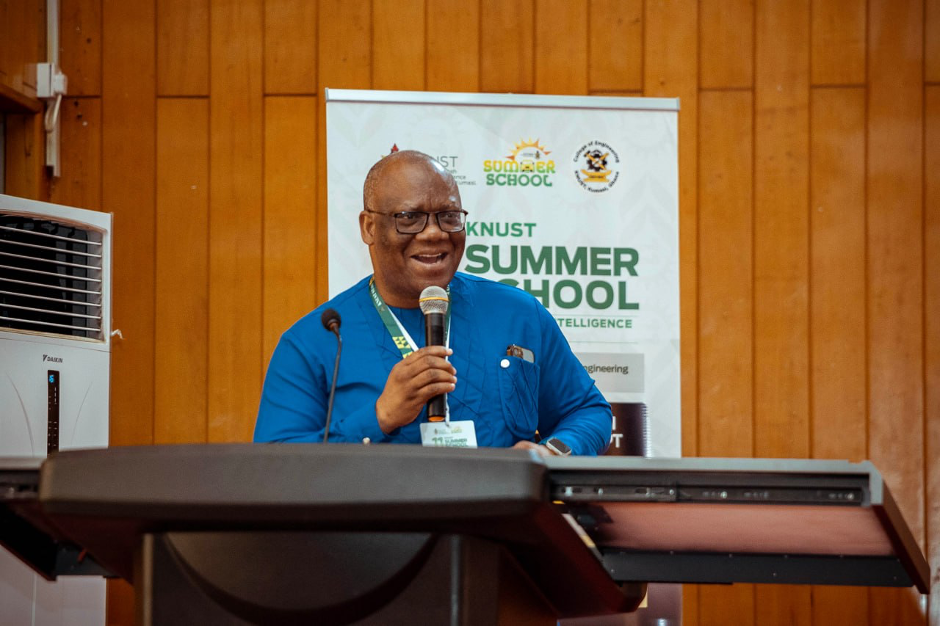
Prof. Jerry John Kponyo, Principal Investigator and Scientific Director of RAIL, in his lecture on “Responsible AI: Opportunities and Challenges for Modern Engineering Education,” asserted that while AI is transforming every field, its potential must be guided by a firm commitment to ethics and accountability.
Prof. Kponyo stressed that engineers, as the architects of future AI systems, carry a unique responsibility to ensure these technologies are transparent, fair, and aligned with human values. He defined Responsible AI as people-centred technology designed to enhance human life, not replace it.
“Education is the foundation,” Prof. Kponyo stated, “and engineers are the custodians of the future.”
Drawing directly from the RAIL FACETS Framework, he outlined the key principles that must be integrated into engineering education: fairness, reliability, privacy, transparency, sustainability, and accountability. He called for interdisciplinary collaboration, urging engineers to work with social scientists to build AI systems that advance social well-being, positioning RAIL as a hub for this critical, cross-disciplinary work.
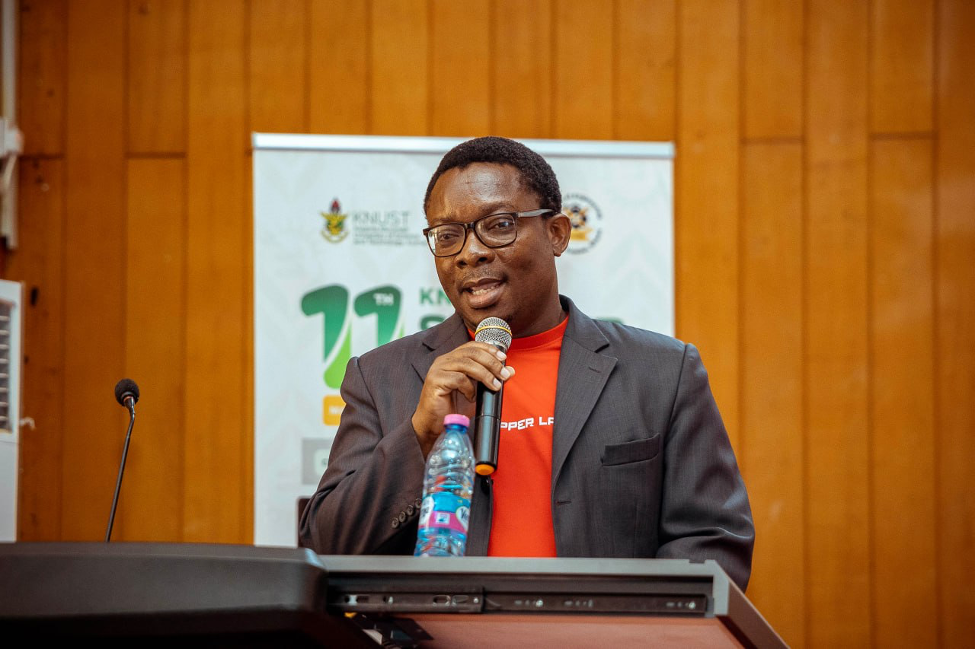
Building on this ethical foundation, Dr. Andrew Selasi Agbemenu, RAIL Project Engineer and Deputy Scientific Director of the DIPPER Lab, delivered a practical session on “Engineering AI Fluency — Best Practices for LLM Integration in Engineering Workflows.” Dr. Agbemenu moved the conversation from why to how, demonstrating how engineers can effectively integrate tools like ChatGPT and Claude into their professional practice.
He introduced an AI Fluency Framework built around automation, augmentation, and agency, showing how AI can support research, ideation, and project management. A key takeaway was his demonstration of the CLEAR prompting framework (Context, Length, Example, Audience, Role), a structured method for communicating with AI models.
“The clearer your input, the better your output,” Dr. Agbemenu emphasised, equipping faculty with a tangible skill to enhance their professional excellence through precise AI interaction.
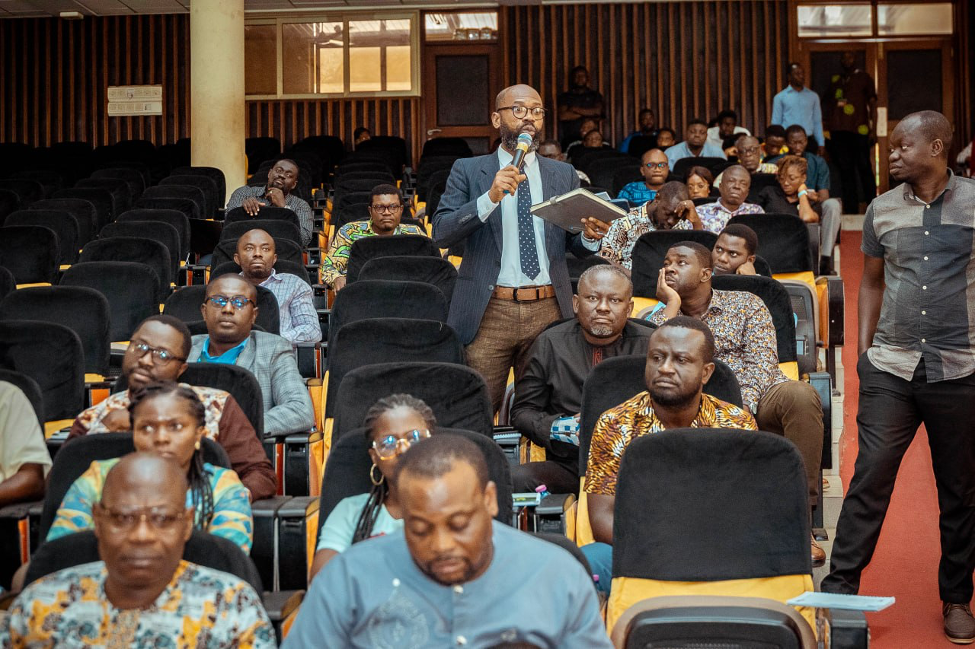
In response to faculty questions about adapting to AI-integrated learning, Prof. Kponyo and Dr. Agbemenu highlighted the need for both infrastructure and a collective mindset.
This led to a decisive conclusion: the College of Engineering, through a collaboration between RAIL, the DIPPER Lab, and other research centres, will explore the development of its own AI model. This proposed model would be a landmark achievement, embodying the college’s values, promoting ethical use, and specifically addressing local educational and research needs.
By framing the path forward, RAIL not only educated but also inspired a collective commitment to ensuring that the College of Engineering is not merely a consumer of AI technology, but an active and responsible shaper of it.