
Six undergraduate interns of the Responsible AI Lab (RAIL) presented their final projects to the RAIL team, chaired by Principal Investigator and Scientific Director, Prof. Jerry John Kponyo, officially concluding their immersive experience at the lab.
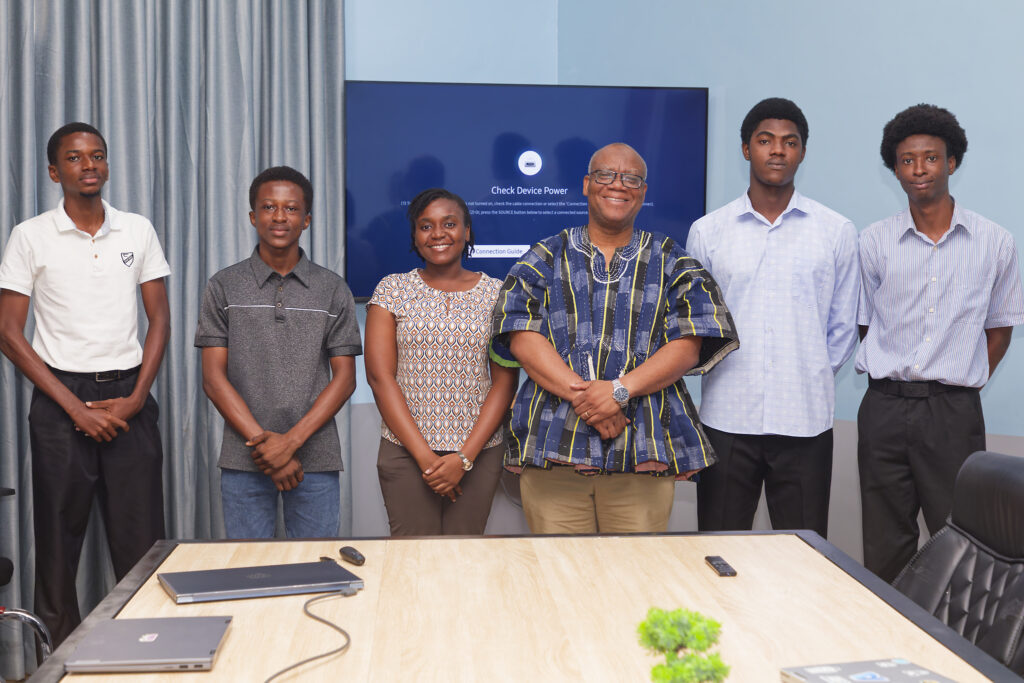
This year’s cohort, comprising five students from Kwame Nkrumah University of Science and Technology (KNUST) and one from the University of Mines and Technology (UMAT), showcased an impressive array of projects. Their work spanned critical areas of healthcare, agriculture, and environmental monitoring, each applying AI and data science responsibly to address real-world challenges in Ghana and beyond.
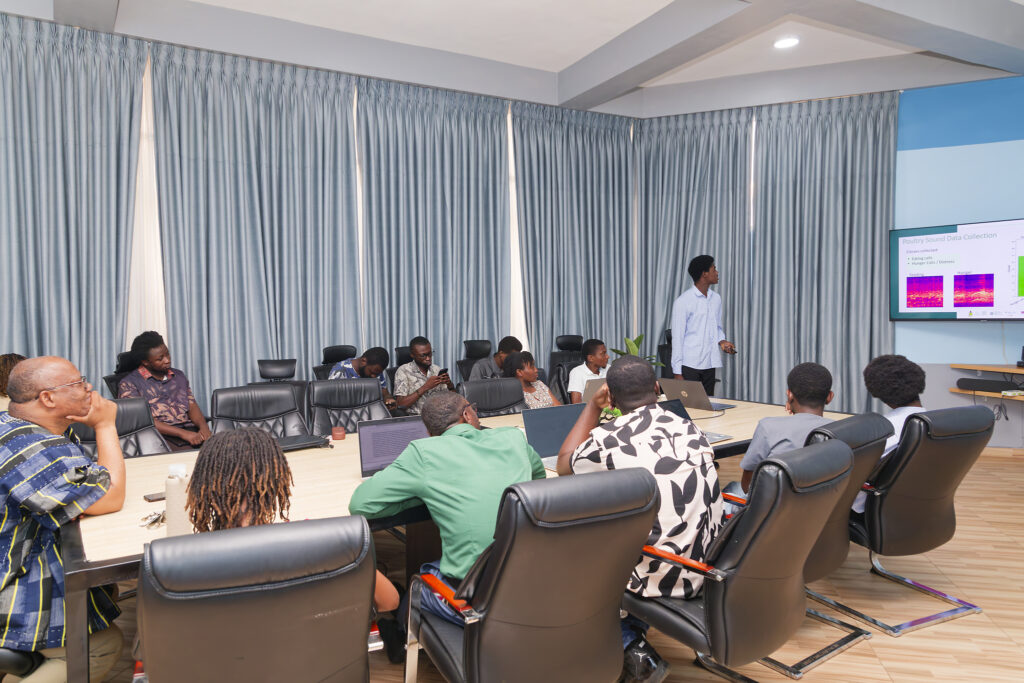
The breadth of research highlights the interdisciplinary nature of responsible AI. The interns and their projects are:
- Daniel Owusu Otis (Computer Science, 4th Year, KNUST): Worked on the Early Detection of Parkinson’s Disease Using Audio Biomarkers and Hand Tremors, a vital project aimed at creating non-invasive, accessible diagnostic tools.
- Sally Sakyibea Tachie (Biomedical Engineering, 3rd Year, KNUST): Developed a Typhoid Fever Forecasting Model, leveraging data to predict outbreaks and potentially inform public health strategies.
- Alour Bright (Civil Engineering, 4th Year, KNUST): Explored Integrating Voice Agents in Agriculture, investigating how intuitive voice-based AI can assist farmers with information and decision-making.
- Emmanuel Kojo Abaidoo (Computer Science, 3rd Year, KNUST): Built a CNN-based Plant Disease Classification system, a tool that could empower farmers to identify crop ailments using image recognition quickly.
- Felix Adu Mensah Amofah (Computer Science, 4th Year, KNUST): Contributed significantly to two initiatives. He assisted the I-Hear project, which focused on designing a low-cost, customised hearing aid tailored to the Ghanaian environment. Additionally, he created a novel dataset to support the application of Machine Learning in poultry monitoring, addressing a key need in local agri-tech.
- Pamela Bugadam (Mining Engineering, 3rd Year, UMAT): Tackled environmental health with her project on Water Quality Prediction, applying analytical models to assess and predict the safety of water sources.
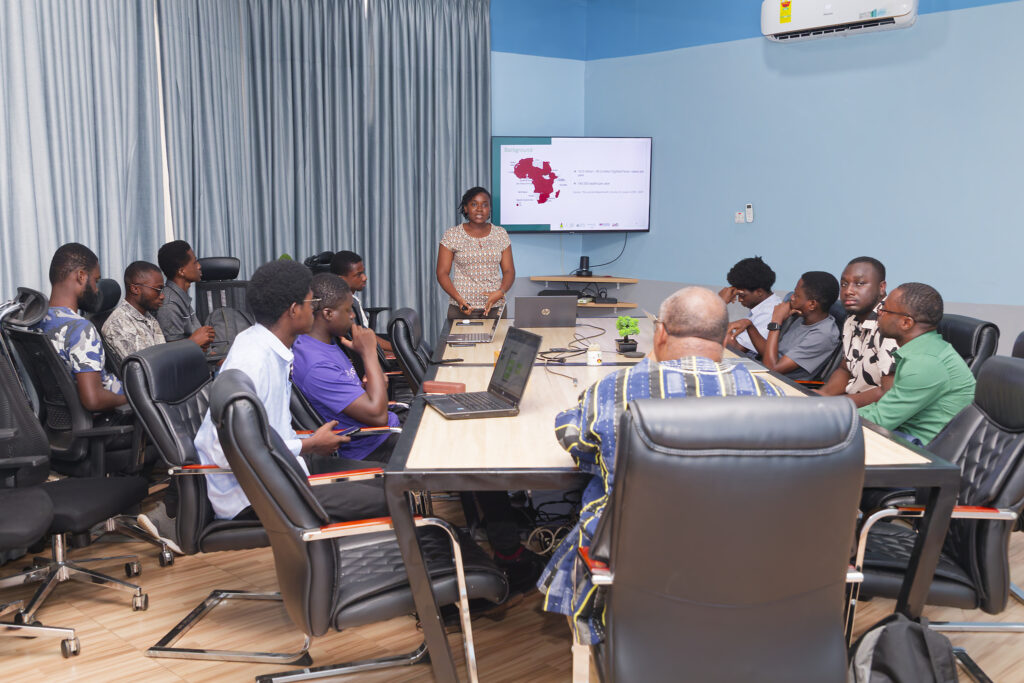
The final presentation session was a testament to months of hard work, featuring live demonstrations, model evaluations, and strategic discussions on the future roadmap for each project. The RAIL team provided constructive feedback, exploring avenues for further research, potential partnerships, and real-world deployment.